
Dark Angels Armour and Squad Markings
Marking a model
Left and right mean the model's own sides. Keep Chapter identity, company, battlefield role, squad, and personal honours separate. A unit attached to a mixed strike force does not automatically become Deathwing or Ravenwing. Start with the chapter map.
Placement
Standard power armour
Wearer-left
Chapter badge
Wearer-right
Role / squad
Terminator armour
Wearer-left
Crux Terminatus
Wearer-right
Chapter / wing badge
Power armour normally has Chapter identity model-left and squad insignia model-right. Terminators reserve the left for their Crux and shift identity right. Codex Astartes shoulder convention.
Armour exception
Studded shoulder exception: when Mark VI-style studs occupy the wearer's left pauldron, put Chapter identity on the right and relocate or reduce the role/squad device. The armour layout overrides the usual shoulder arrangement. GW's explanation of the studded pauldron.
Green Dark Angels use white Chapter identity, red role badges, and model-left company knees. Ely's Dark Angels placement guide.
Helmet and rim colours normally follow the armour, rather than Ultramarines-style rank helmets or company-coloured rims. Forehead ornaments, robes and personal heraldry add distinction. Ely's studio-convention checklist. The owner's sergeant shields are an approved addition; they do not replace company knees or squad identification.
Use battle companies 3–5; Ely's isolated “2–5” is inconsistent.
Company knees: visual key
These patterns were checked against the diagrams linked from Lexicanum's individual company entries, citing Codex: Dark Angels (7th edition), p.13. Diagram-left/right below means looking directly at the badge, not the model's left/right limbs. Old scans are colour references only in the broad sense; pale fields may read white or bone. They are not paint swatches.

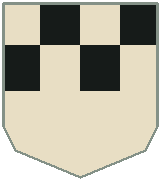



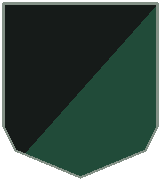
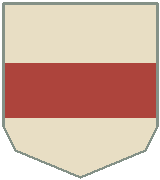

Deathwing and Ravenwing identify their specialised companies through livery and badges; use their Deathwing and Ravenwing pages for exceptions and squad heraldry.
Battlefield roles
Dark Angels role devices: double-ended vertical arrow, Battleline; four-way arrow, Close Support; blast, Fire Support. Ely's Dark Angels guide.
The independent 11th-edition review groups current infantry as follows. This is background organisation, not the game's BATTLELINE keyword:
Battleline
Infantry examples
Intercessors, Heavy Intercessors, Infiltrators.
Close Support
Infantry examples
Assault Intercessors, including jump packs; Inceptors, Incursors, Reivers, Infernus.
Fire Support
Infantry examples
Aggressors, Desolation, Eliminators, Eradicators, Hellblasters.
Knotley's advance codex review independently supports the updated list. Older squad types belong in the historical notes, rather than being silently erased from an existing collection.
Unresolved · Infernus
Infernus remains a source conflict: printed categorisation says Close Support, while GW miniatures and earlier presentation display Fire Support. Lexicanum prefers the visual interpretation; that preference is editorial inference. Either should be labelled by the source followed, rather than described as undisputed. Conflict and citations.
Squad numbers and attachments
The usual battle-company plan is 1–6 Battleline, 7–8 Close Support, 9–10 Fire Support. Reserve squads can extend a reinforced company to 11–20, without repeating that fixed role allocation. The 10th's Vanguard numbering is also more flexible. A ten-man squad split into two combat squads can retain one squad number; two tabletop units do not necessarily mean two permanent organisational squads. Codex Astartes organisation and numbering.
Keep a roster recording parent company, attached company, squad number and chosen badge. Applying the generic attached-company heraldry convention to Dark Angels knees is a reasonable planning interpretation; it does not justify repainting Deathwing bone or Ravenwing black green. Retaining a reserve company's own identity is the more conservative option when no specific attachment example is being followed.
Continue exploring